


Meet the founder : Patrice Plante from NOA

Gilles Miller
Industry Insider, Upside Drinks
Mixologist of the Year. A decade at the top of classic cocktails. Then he turned toward the one category most bartenders still ignore. We asked Patrice why, and how to tell a serious non-alcoholic bottle from one just surfing the trend.

Photo · Sacha Roy
By 2018, Patrice had spent close to a decade at the top of the classic cocktail world. Mixologist of the Year. Books on the shelf. A room that went quiet when he started talking technique.
Then he pointed all of it at the drinks most bartenders still treat as an afterthought: the ones with no alcohol in them.
He calls his craft liquid cuisine. He started as a cook, picked up bartending close to thirty, and never stopped being fascinated by what a liquid can do. NOA is where that obsession landed. Not a guilt-free gimmick, not a wellness play. A real attempt to make non-alcoholic drinks worth ordering on their own terms.
We sent him six questions. He answered like someone who has thought about this for a long time.
TEN YEARS AT THE TOP, THEN A LEFT TURN
You were Mixologist of the Year in 2018. What pulled you from there to building a non-alcoholic brand?
I was a cook before I was a bartender, which I became close to thirty. So I was always fascinated by every liquid, not just the alcoholic ones. I have always called my profession liquid cuisine.
My first real contact with the category came in 2014, when a Montreal company asked me to build non-alcoholic cocktails for a food show in Las Vegas. The decision to actually build NOA came from something more personal. A diagnosis of hypertension, combined with burning tongue syndrome, forced me to look at my own options, and I saw how limited they were. I also saw an opening. After the pandemic, a lot of us went back and questioned how we drink. As someone curious by nature and trained in alcohol, I figured my approach could be different, and that it would speak to the hospitality trade. The non-alcoholic revolution only happens if the people inside the industry bring creativity and innovation to it.
HE BUILDS A BOTTLE LIKE A SOMMELIER
When you develop a NOA product, where do you start?
I start with a sommelier's work. I taste an alcoholic range and write down its flavours, and not just the flavours but their intensity. Like a sommelier, I try to catch every nuance.
"Not 'this tastes like tomato,' but 'this tastes like the green of a tomato stem you just picked.'"

Photo · Annie Ferland
Then I decide on sweetness, and how much of it I am willing to use to build texture. From there I taste, roast, and macerate a long list of ingredients until I reach the flavour, the complexity, and the strength I am after. Once that is done, the real job begins: simplifying the recipe and combining it with natural extracts and aromas so it keeps its punch and can be reproduced at scale. It is easy to make one good litre. The challenge is making a thousand litres a week after that.
For reading the market, I listen to restaurant owners as much as I can. They are on the front line. They know what the customer is actually asking for.
NOT A REPLACEMENT
Most of the category sells itself as a replacement. Zero-proof this, spirit-free that. Where does NOA sit?
My niche is inclusivity in restaurants and the quality of the experience, so I position NOA as an alternative that still carries the notes professionals and drinkers already know. The creativity of the final drink belongs to the bartender, or to the person making it at home. But to feed that creativity, you cannot hand them something completely foreign in taste. You have to respect the codes that are already in place. That is how non-alcoholic actually takes off. Look at non-alcoholic beer. Nobody tried to reinvent the wheel or pull the drinker out of their comfort zone.
There is a lot of experimentation right now with functional drinks, mushrooms, electrolytes, and so on. I think those speak first to people who are already sober and very curious about the category, the early adopters. But if you want to reach the 94% who still drink and simply want to handle some of those moments differently, you have to respect the social moment. It is about sharing and pleasure, and for me it has to live inside the same codes as alcohol. Functional drinks will have a hard time fitting into that moment, because they belong to the post-workout, wind-down occasion instead.
WHAT DRINK BETTER ACTUALLY MEANS
Drink better comes up a lot when you talk. In 2026, what does it actually mean?
Drink better is, at its core, about taking apart a cultural reflex we have passed down for generations: that alcohol belongs to every social and celebratory moment. That idea needs to be deconstructed.

It can also mean treating yourself to a hundred-dollar bottle of wine instead of a nine-dollar one, and not drinking it every week. Drink quality. Drink less. Sometimes alcohol, sometimes something light, sometimes nothing at all. That philosophy speaks to me. It is also why I have a harder and harder time with cheap products that offer nothing but a low price, sacrificing the quality and the soul of the drink with artificial aromas and mediocre ingredients.
THREE WAYS TO SPOT AN HONEST BOTTLE
Someone is standing in front of the non-alcoholic shelf, overwhelmed by the choice. Give them three ways to tell an honest product from one surfing the trend.
First, the ingredient list. It never lies. If all you see is water and aromas, expect a liquid with no texture and no punch, especially if the label tells you it has to be mixed to be enjoyed.
Second, do not let a beautiful bottle do the talking. A nice bottle does not justify overpaying. And be just as careful with a product priced well below average. That usually points to someone surfing the trend, not a product earning its place through a real method.
Third, watch for a lack of transparency. When you are proud of your product, you talk about it constantly. If there is little information on how it was made, no nutritional panel to look at, and no way to check a claim, the company is hiding something.
"The ingredient list never lies."
FIVE YEARS OUT
Five years from now. What does the category look like if it goes the right way, and what does it look like if it goes the wrong way?
If it goes the right way, non-alcoholic is a full part of our events, our celebrations, and restaurant menus. In a single evening you move from an alcoholic cocktail to a non-alcoholic one to a low-alcohol one, or a tiny (an alcoholic cocktail served in a small glass). The glorification of drinking to excess is behind us.
If it goes the wrong way, the category got too preachy and never tried to understand the regular drinker. It stays stuck in the big cities, never reaches the regions, and never manages to look cool or attractive to the average person.
Discover our Shop with
1000+ alcohol-free options
From sparkling wines to craft beers and botanical spirits, there's something for everyone.
BROWSE THE STORE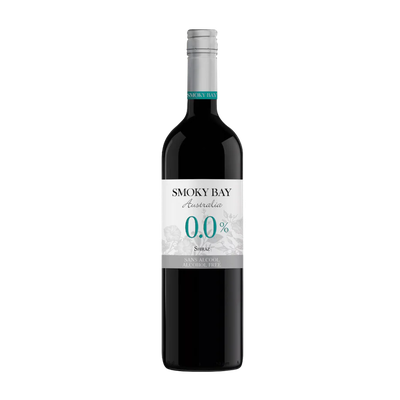
You May Also Like
 IndustryWhy Tonic Water Glows Under a Blacklight
 IndustryWhy NA Wine Is the Hardest One to Get Right
 IndustryModeration Isn't a Gen Z Thing